


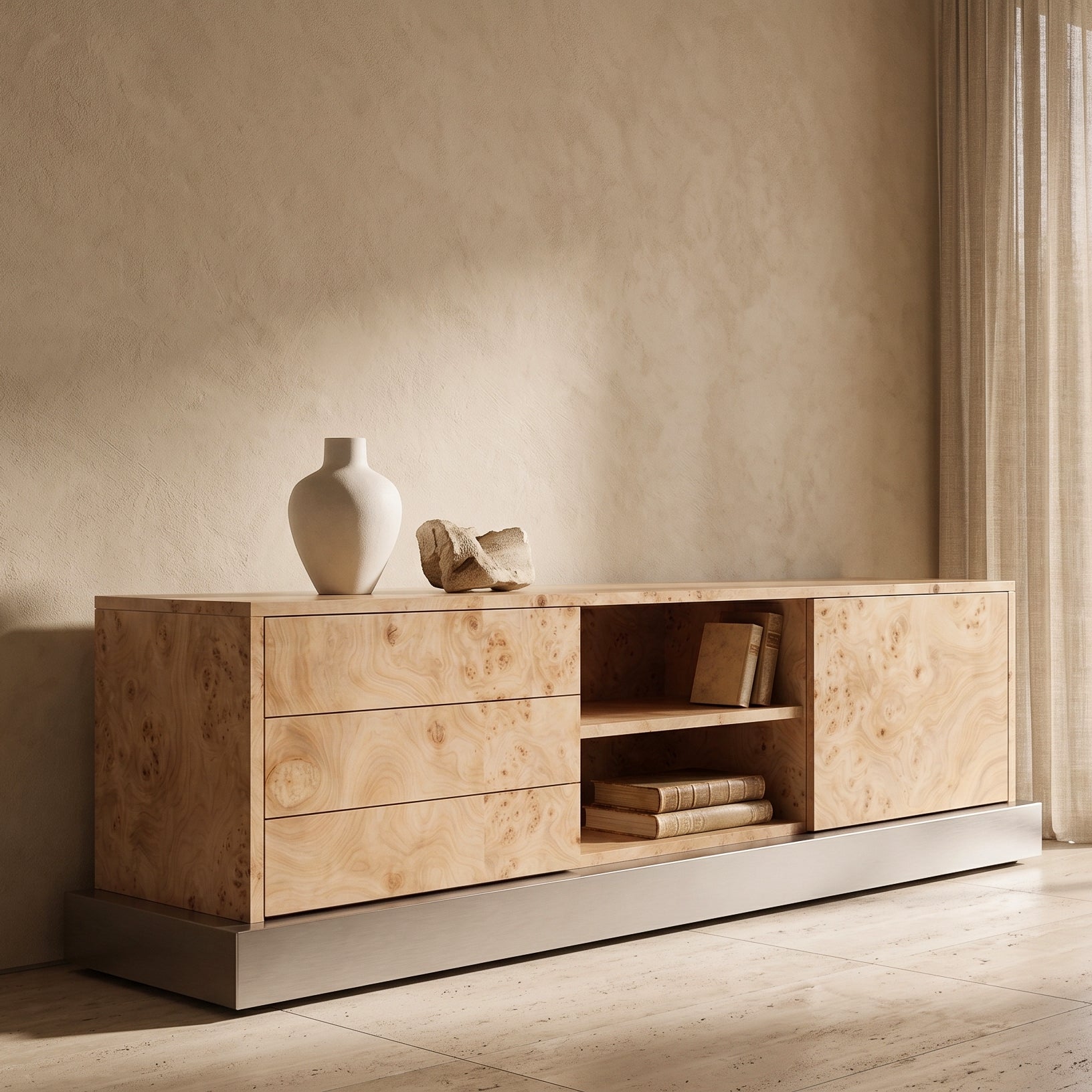
The Mid-Century Modern style, which emerged in the mid-20th century and remains one of the most important sources of inspiration for interior designers, has one main character: natural wood. This material, with its warm color, rich grain structure, and malleability, allowed for the creation of furniture with light, organic forms that completely transformed the character of our homes.
During that era, heavy, ornate sideboards were abandoned in favor of simple furniture crafted from exceptionally refined woods. Wondering which wood species dominated that era, how to distinguish them, and how to properly care for them to last for generations? We invite you to read our guide to refined retro materials.
Wood as the Foundation of Mid-Century Modern Style
After the end of World War II, interior design experienced a dramatic shift. People desired lightness, space, and a closer connection with nature. Oak, walnut, and teak became the ideal materials to achieve these goals.
Analyzing the popular wood species for furniture from this period, we see that the key was to highlight the natural beauty of the raw material. Instead of covering the wood with thick layers of opaque paint, oils, waxes, and transparent polishes were used, allowing the surface to "breathe" and revealing the unique grain. Wooden furniture from this period was intended to be pleasant to the touch, warm, and durable. It became a symbol of a return to craftsmanship and an escape from the soullessness of mass industrial production.
Main Wood Species Used in Retro Furniture
In the mid-20th century, designers had access to many wonderful wood varieties, both native and exotic. The most popular were:
Teak: The absolute king of Scandinavian style. Originating in Southeast Asia, teak is characterized by a beautiful, honey-brown hue that darkens over time. Thanks to its high oil content, it is extremely durable and moisture-resistant.
American Walnut: A very refined wood with a deep, dark brown color, often with purple or chocolate tones. It has an exceptionally expressive, wavy grain pattern that gives furniture a luxurious character.
Oak: A native classic, valued for its hardness, weight, and resistance to damage. It has a light, straw-colored color and pronounced, deep pores. Oak was often used to build sturdy chair frames, table legs, and chests of drawers.
Rosewood: An exotic wood with a very dark, chocolate-purple color and distinct black stripes. Used primarily for the most exclusive office furniture.
How to Tell What Kind of Wood Furniture Is Made of? A Practical Guide
For the layman, distinguishing different types of wood at first glance can be difficult, especially if the furniture has been treated with a stain or varnish. However, there are a few tips for identifying what kind of wood furniture is made of by paying attention to its natural characteristics:
Oak - Unique Structure
You can recognize it by its characteristic, visible pores (tiny depressions in the wood's structure) and its light, yellow-brown color. Oak wood is also very heavy.
American Walnut - Unusual Grain
It has a dark, deep chocolate color. Walnut's grain is wide, smooth, and creates beautiful, parabolic patterns.
Teak - Unique Touch
It has a distinctive, warm, honey-colored or olive-brown hue. To the touch, teak wood can feel slightly oily or waxy due to its natural oils.
How to care for and maintain vintage wooden furniture?
Furniture made of fine wood and natural veneers requires proper attention to maintain its charm for years to come. Above all, remember the three enemies of wood: moisture, high temperatures, and UV radiation. Avoid placing furniture directly next to radiators or in areas exposed to intense sunlight for long periods, which can cause the material to fade and crack.
By choosing high-quality vintage wooden furniture, you'll be buying furniture that will last for generations, provided you take proper care of it. For daily cleaning, use a dry or very slightly damp microfiber cloth. Oiling or waxing every few months is a good idea, depending on the furniture's original finish.
Oiling refreshes the color of the wood, penetrates it, and protects against moisture. Waxing, on the other hand, creates a hard, satin-finish protective layer on the surface, preventing scratches and dust accumulation.
An important element of daily protection is using coasters under cups of hot drinks or glasses of cold drinks, which can leave difficult-to-remove white rings on countertops. If a water stain appears on oiled furniture, don't panic. You can gently rub it with the finest grit (0000) steel wool soaked in wood oil, and then wipe it with a dry cloth.
FAQ
Which wood species are best for vintage furniture?
It all depends on the desired visual effect. Oak provides maximum hardness and resistance to wear, American walnut lends an elegant, dark character to the interior with beautiful grain, while teak delights with a warm, honey-colored hue and moisture resistance.
How to distinguish oak furniture from walnut?
Oak has a light, straw-yellow color and deep, visible pores on the surface. American walnut is much darker, with a deep chocolate color with purple tones, and its grain creates gentle, wide patterns without clearly defined deep pores.
How to care for oiled vintage furniture?
You should regularly wipe it with a dry microfiber cloth and avoid contact with large amounts of water. Every 3-6 months, apply a thin coat of dedicated wood oil to the surface. After a few minutes, wipe off any excess oil and polish the furniture with a dry cloth.
Is natural veneer real wood?
The grain pattern of natural veneer is created by thin sheets of real wood (0.6 to 3 mm) glued to a blockboard or MDF board. This furniture has the same appearance and smell as solid wood, while being more resistant to warping from moisture.
Where should you place natural wood furniture in your living room?
This furniture should be placed away from direct heat sources, such as radiators or fireplaces (minimum distance is 1 meter). Avoid direct sunlight to prevent fading and drying of the wood due to UV rays.


